Dr. Lisa
  • Questions?
  • Psychology Today Blogs
  • Kids Can See Ghosts Can You?
  • October Ghost Stories
  • YouTube
  • Publishings
  • Who Am I?
  • Talk To Me

Kids Can See Ghosts,
Can You?

Picture

Blog 65: Choice or No Choice?

7/1/2022

0 Comments

 
Picture
Introduction
Periodically, I will blog about issues in psychology that are not in relation to Nebulous Children, or children who can see ghosts. At times, it is based upon public questions. Today, however, is one of those days where I was thinking a lot about two pregnant teenage girls. I am not only dedicating this blog to them, but I want you to use it as a teachable moment. Consider their stories and ask yourself,

How Would I Handle These Situations?

Teenage Pregnancy
The field of psychology is broad and one's speciality area draws specific members of our population to them. For example, if you choose to work in schools or community mental health centers, more than likely a pregnant teen will become your client. Choosing not to work with that child can be an option, but make your choice based upon your ethics code and not grounded in feelings. As you may have guessed, it's a tough situation but one that you will need to deal with at some point in your career in psychology. Here are two of my experiences:
  1. Pregnant female, aged 14. Homeless, parentless, and an active heroine abuser. This child was also AIDS positive and a prostitute. As you can read, this was a tough case and a significant amount of resources were needed such as safety, drug & alcohol addiction treatment, and obviously medical interventions. Please know that we lost this child to the streets and I do not know the outcome of her pregnancy or whether or not she was still alive after treatment and medical interventions.
  2. Pregnant female, aged 13. The good news was that this child trusted me enough to convince her to tell a trusted adult relative about her pregnancy. The bad news was that the trusted adult told this child that she had no choice but to be a mother. This kid felt awful and alone without support because she was removed from her home due to physical, sexual, and emotional abuse. She had no contact with her immediate family. This child terminated her pregnancy.
    1. Side Bar: Honestly, a few times I needed to strongly verbally intervene on behalf of this child toward the adult. This child finally told another adult relative who became very supportive of this child's emotional needs.

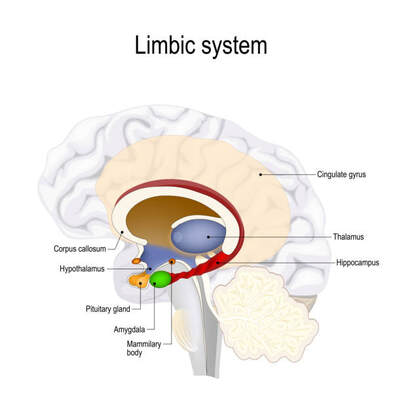
Limbic System
The limbic system, or a part of our brain that is involved in our behavioral and emotional responses, is like pressing your gas peddle too fast in your car and causing it to accelerate too rapidly. It is the emotional engine within our bodies, and is very active and overly reactive in the teenage years. Survival, memory assessment, and storage are the responsibilities of the limbic system. Dopamine, a neurotransmitter within the limbic system of our brains, is increased in teenagers and causes adolescent risk-taking behaviors. The limbic system develops faster than the pre-frontal cortex hence, the reason that rational thinking and behaviors are slower to occur in children and teenagers. The pre-frontal cortex, which gives us cognitive control, does catch up, but while this happens a teen's desire for rewards, social pressure, and impulsivity rules. Rational thinking will override it once the prefrontal cortex reaches full development.

Given this knowledge about the function of the limbic system, I am happily surprised when the percentage of teen pregnancy rates decrease within the United States. First, you must understand the brain function of pregnant teens in order to work with them. Then, it is easier to help them to cope with their choices and develop a plan of action to improve their daily living.

Psychological Implications of Teen Pregnancy
Let's state the obvious, we all know that children do not need to be parents. I want you to continue to remember, however, that children act upon emotions. This is why the teenage years can be trying, and when unplanned teen pregnancies occur, we must support them. Now, do we superimpose our feelings onto these kids? No. You work with them by acknowledging their pain and circumstances. If you are a therapist, empirically approved therapies, such as cognitive behavior therapy (CBT) can decrease the anxiety and sadness.

Psychologically, these girls are mentally vulnerable from the pressure to discuss the pregnancy with their families. Some fear their family's responses more than the public. Then, if they decide to continue on with the pregnancy, the public scrutiny begins even less support with individuals casting judgment upon these girls, ridicule, isolation, verbal abuse, and sometimes physical abuse, to say the least. It is emotionally rough being a pregnant teen, but few have little sympathy for them. Then comes the the thoughts and conversations about abortion,

"You can abort it"
  • Ever had to face this choice?
  • Ever had to make this choice as a teenager?
  • If not, do not judge them.
  • I watched the two girls cry above, and I cried with them. 

Choice or No Choice
Oh the agony for pregnant teen girls! These two girls, as do other teenagers, know that they are not ready to become mothers. Many teens do not believe that a pregnancy will happen to them, (see the limbic system above). When it does happen, many teenagers are shocked. Many want to tell these girls to continue their pregnancies, but this is a painful experience for them. To have a baby or not? That is a question that all women face, but teen girls are not "supposed" to deal with that decision yet. It would benefit a teen girl if we did not make a choice for her about what she needs to do with her pregnancy. Nor should we steer her into a specific direction. Nevertheless, some teenagers will ask,

What would you do?

You can disclose your stance if you choose to do so. I do not share my personal opinion or beliefs at all with my clients. I will provide psychoeducation to pregnant teens only without pointing out what I would do in their situation. I keep the conversation in line with the main objective, their mental health and not Dr. Lisa's personal opinion. For both teens, I was supportive in conversation, and continued to treat their symptoms of mental illness for as long as I could and it was needed. Transferring my beliefs, thoughts, and choices onto these two children was not an option. 

Whether or not to have an abortion will be asked of you. If you are onboard with abortion or not, it is still an option for the pregnant teen. She will want to consider and understand the psychological ramification of having an abortion if she chooses that route. Pertaining to abortion, it is not a cavalier form of birth control but a devastatingly emotional way to end a pregnancy that for some, was unexpected. You can tell yourself, "Well she should not have had sex anyway," as a default to justify why the child should not abort but that line of thinking is not helpful. It's a lack of empathy and criticism after the fact.

WE cannot live in a bubble...crap happens to the best of us!

Dr. Lisa's Tips 
  • The overarching goal is to work with the pregnant teen.
    • Make her comfortable enough to continue to want to work with you.
    • Recognize parental emotions as well.
  • Provide psychoeducation.
    • Developmental outcomes (healthy birth, school success, & healthy relationships).
  • When interacting with her, set aside your personal feelings.
    • Remove your biases and judgements.
    • Be empathetic and not critical.
    • Being supportive is key.
      • This includes decisions that you may not make for yourself.
      • Remember, she has a choice! ​
Photo Courtesy: istockphoto.com

0 Comments

Your comment will be posted after it is approved.


Leave a Reply.

  • Questions?
  • Psychology Today Blogs
  • Kids Can See Ghosts Can You?
  • October Ghost Stories
  • YouTube
  • Publishings
  • Who Am I?
  • Talk To Me